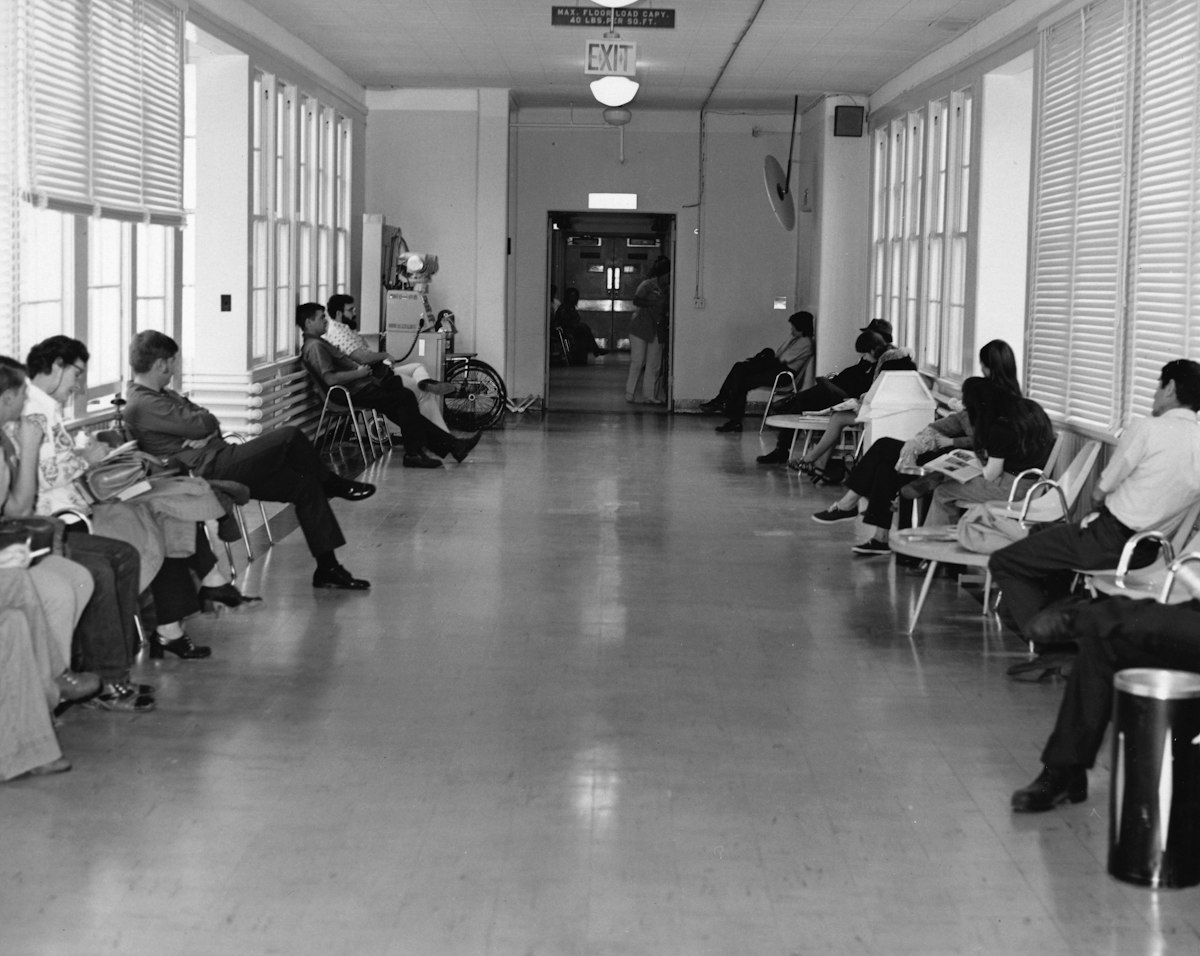
If you have tried to book a specialist appointment recently, you already know something is wrong. You call the office. You are put on hold. You are finally told the earliest available appointment is six weeks away. Maybe eight. Maybe longer. You hang up wondering whether what you are experiencing is serious enough to keep trying — or whether you should just wait and see.
You are not imagining it. Specialist wait times in the United States have been rising for years, and the forces driving that increase are not going away. Understanding why this is happening — and what you can do about it — is increasingly important for anyone who needs timely access to specialist care.
The Numbers Are Getting Worse, Not Better
In 2004, the average wait time to see a specialist in a major American city was just over three weeks. By 2017, that number had climbed to 24 days. By 2023, surveys across major metropolitan markets were reporting average specialist wait times exceeding five weeks — and in many specialties and regions, the real number was far higher.
This is not a temporary disruption. It is not a pandemic artifact that will self-correct. It is a structural trend driven by forces that have been building for decades, and by most projections, it will continue to worsen through the 2030s unless something fundamental changes.
For patients, the practical reality is this: if you call a specialist today and are told the earliest available appointment is in ten weeks, you are not experiencing bad luck. You are experiencing the predictable outcome of a healthcare system operating well beyond its capacity.
What Is Driving the Crisis
The specialist wait time crisis does not have a single cause. It is the product of several converging forces, each of which would be challenging on its own. Together, they have created a system under sustained pressure.
A physician shortage that is accelerating
The Association of American Medical Colleges projects a shortage of between 37,800 and 124,000 physicians by 2034, with specialist shortages representing a disproportionate share of that gap. The pipeline of new physicians has not kept pace with demand, and the time required to train a specialist — often a decade or more of education and residency — means that even aggressive policy interventions today would take years to show up in patient access.
An aging population with greater healthcare needs
The baby boomer generation — 73 million Americans — is now fully in the age range where specialist care becomes most necessary. Cardiology, orthopedics, neurology, oncology, and rheumatology visits increase significantly with age. As this cohort moves through their sixties, seventies, and beyond, demand for specialist services is rising sharply at the same time supply is constrained.
Physician burnout and early retirement
Surveys consistently show that physician burnout is at or near record levels. Administrative burden, electronic health record requirements, prior authorization demands from insurers, and pandemic-era stress have driven a meaningful number of experienced physicians to reduce their hours or retire earlier than planned. Every physician who leaves practice ahead of schedule removes thousands of patient appointments from the system annually.
Insurance complexity reducing effective capacity
A growing share of specialist physician time is now consumed by activities that do not involve patient care: insurance prior authorizations, appeals, documentation requirements, and administrative overhead. Studies suggest that physicians now spend nearly two hours on administrative tasks for every hour of direct patient care. This effectively reduces the number of appointments available even when the physician headcount stays the same.
Healthcare consolidation limiting competition
Hospital and health system consolidation has accelerated sharply over the past two decades. As independent practices are absorbed into large systems, the competitive pressure to offer convenient scheduling and fast access often diminishes. Large systems can optimize for revenue and efficiency in ways that do not always align with patient access and throughput.
The Specialties Hit Hardest
Wait times are not evenly distributed across medicine. Some specialties have been hit particularly hard, and patients in these areas face some of the most serious access challenges in the system.
Psychiatry and mental health
Mental health specialist access is among the most constrained in American medicine. In many markets, new patient wait times for psychiatrists exceed three months. The shortage of psychiatric providers is severe and worsening, with demand dramatically outpacing supply following the pandemic.
Dermatology
Dermatology routinely reports some of the longest new patient wait times of any specialty, often exceeding 30 to 40 days in major markets and considerably longer in suburban and rural areas. Given that delayed diagnosis of skin conditions — including melanoma — carries serious consequences, this access gap has direct health implications.
Orthopedics
Orthopedic surgery is heavily affected by both physician shortages and the aging population. Joint replacements, spine procedures, and orthopedic consultations are in sustained high demand, and surgical scheduling backlogs can stretch for months.
Cardiology
Cardiology access varies significantly by market but is under sustained pressure nationally. In many mid-sized and rural markets, new patient appointments with cardiologists extend well beyond four weeks — concerning given that cardiovascular symptoms often warrant prompt evaluation.
Neurology
Neurology is among the most supply-constrained specialties in the country. New patient appointments in neurology routinely stretch beyond six weeks in many markets, and patients with conditions like epilepsy, multiple sclerosis, or Parkinson's disease often face repeated delays in accessing the specialist oversight their conditions require.
The Geographic Divide
National averages, as frustrating as they are, mask a deeper inequality in how wait times are distributed across the country.
Patients in major urban centers — New York, Chicago, Los Angeles, Boston — often face long waits, but they at least have options. Multiple health systems, competing practices, and a denser physician population mean that a persistent patient willing to make calls and consider different providers may find earlier availability.
Patients in rural and semi-rural areas frequently face a different reality entirely. In many parts of the country, a single specialist serves an entire county or region. When that physician is booked, there is no alternative within reasonable distance. Patients in these communities may wait not weeks but months — or may need to travel hours to reach the nearest available specialist.
This geographic inequality is one of the least-discussed dimensions of the access crisis. It means that your zip code has a significant effect on your access to timely care — an outcome that is difficult to justify in the world's largest healthcare economy.
What This Actually Means for Patients
Behind the statistics are real people navigating real consequences. A ten-week wait for a cardiologist is not an abstract inconvenience — it is ten weeks of living with symptoms that may or may not be serious, ten weeks of anxiety, and potentially ten weeks during which a condition that was treatable becomes more complicated.
Patients navigating long specialist waits tend to follow one of several paths, none of them ideal:
They wait and hope.
Many patients accept the offered appointment date and wait, living in uncertainty and managing symptoms as best they can. For conditions that are stable, this may be fine. For conditions that can progress, it carries real risk.
They go to the emergency room.
When symptoms become acute or anxiety becomes unbearable, patients who cannot access timely specialist care often turn to emergency rooms. ER visits are dramatically more expensive than specialist appointments, often provide less effective evaluation for non-emergency conditions, and contribute to ER overcrowding that affects all patients.
They go without care.
A significant number of patients, facing a multi-month wait, simply decide not to pursue the appointment at all. They tell themselves it was probably nothing, that they'll deal with it later, or that the system is too difficult to navigate. Some of these patients eventually develop complications that a timely evaluation would have prevented.
They seek alternatives.
A growing number of patients are actively looking for alternatives to the traditional scheduling system — concierge medicine, direct specialty care, priority scheduling services, and platforms that connect patients with providers who have earlier availability. This market is growing precisely because the standard system is failing to meet demand.
What Patients Can Do Right Now
While the systemic forces driving specialist wait times are not something any individual patient can solve, there are meaningful steps you can take to improve your own access to timely care.
Ask to be put on the cancellation list.
Most practices have cancellation lists, and appointments open up more frequently than patients expect. Being on this list costs nothing and can result in an appointment weeks or months earlier than your originally scheduled date.
Call multiple practices.
Within any given specialty, wait times can vary significantly between practices and individual physicians. A ten-minute investment in calling three or four offices can sometimes uncover availability that a single call would not have found.
Ask for a direct referral.
A call from your primary care physician to a specialist's office carries more weight than a patient self-referral in many systems. If your situation is time-sensitive, ask your PCP to make a direct call advocating on your behalf.
Consider priority scheduling services.
Platforms like FastAccessMD™ exist specifically to address the gap between standard appointment availability and the care patients need in a timely way. For situations where the standard wait is genuinely not acceptable — symptoms that warrant prompt evaluation, conditions where early intervention matters — these options are worth exploring.
Document your symptoms.
If your wait is unavoidably long, keep a detailed log of your symptoms — when they occur, how severe they are, and any changes over time. This documentation makes your eventual specialist appointment more productive and ensures that progression does not go unrecorded.
A Note on the Future
There are genuine efforts underway to address the specialist access crisis. Expanded roles for nurse practitioners and physician assistants in specialty settings, telehealth expansion enabling patients in underserved areas to access remote specialists, and medical school capacity increases all represent meaningful steps.
But the honest assessment is that these efforts are unlikely to close the gap in the near term. Training a specialist takes years. Telehealth helps with some conditions and is insufficient for others. And demand continues to grow.
In the meantime, patients need to be informed advocates for their own care. Understanding why wait times are long — and that the problem is structural, not personal — is the first step toward navigating the system more effectively.
The American healthcare system has extraordinary capabilities. Getting access to those capabilities in a timely way is the challenge of our era. The patients who navigate that challenge most successfully are the ones who know their options and use them.
FastAccessMD™ is a scheduling platform only and is not a HIPAA covered entity. No protected health information is collected or stored.